
// CATEGORY
All Event IT
The technology backbone behind flawless live, hybrid, and virtual events.
Explore
End-to-end hybrid event technology that gives in-person and remote audiences one shared, interactive experience — not two disconnected ones.

End-to-end hybrid event technology that gives in-person and remote audiences one shared, interactive experience — not two disconnected ones. When remote attendees are treated as equals, not an afterthought, both sides participate fully: remote guests ask questions that appear on venue screens, vote in the same polls, network with delegates, and see a produced broadcast instead of a static camera feed.
Most hybrid events fail at the integration layer. The remote audience watches passively while the in-person event proceeds unchanged. The result: two separate experiences, not one shared one.
ZebIQ solves this by running a two-way hybrid stack:
The operational layer matters too. We synchronise registration and check-in data across both audiences, manage remote speaker contributions with broadcast-quality return feeds, and consolidate engagement analytics into one post-event report.
Remote speakers appear on venue LED walls with confidence monitors and return audio. Stage feeds reach online viewers as a produced broadcast, not a security-camera view.
Shared polls, Q&A, and live reactions across both audiences. Moderated questions from either side surface to the stage in real time.
One registration system handles in-person and virtual tickets. The same dataset feeds check-in, badging, and platform access automatically.
Pre-event tech checks, browser-based contribution links, and a green-room workflow. Remote presenters go live without friction.
A producer focused entirely on the remote audience — managing transitions, moderating chat, and keeping engagement high between sessions.
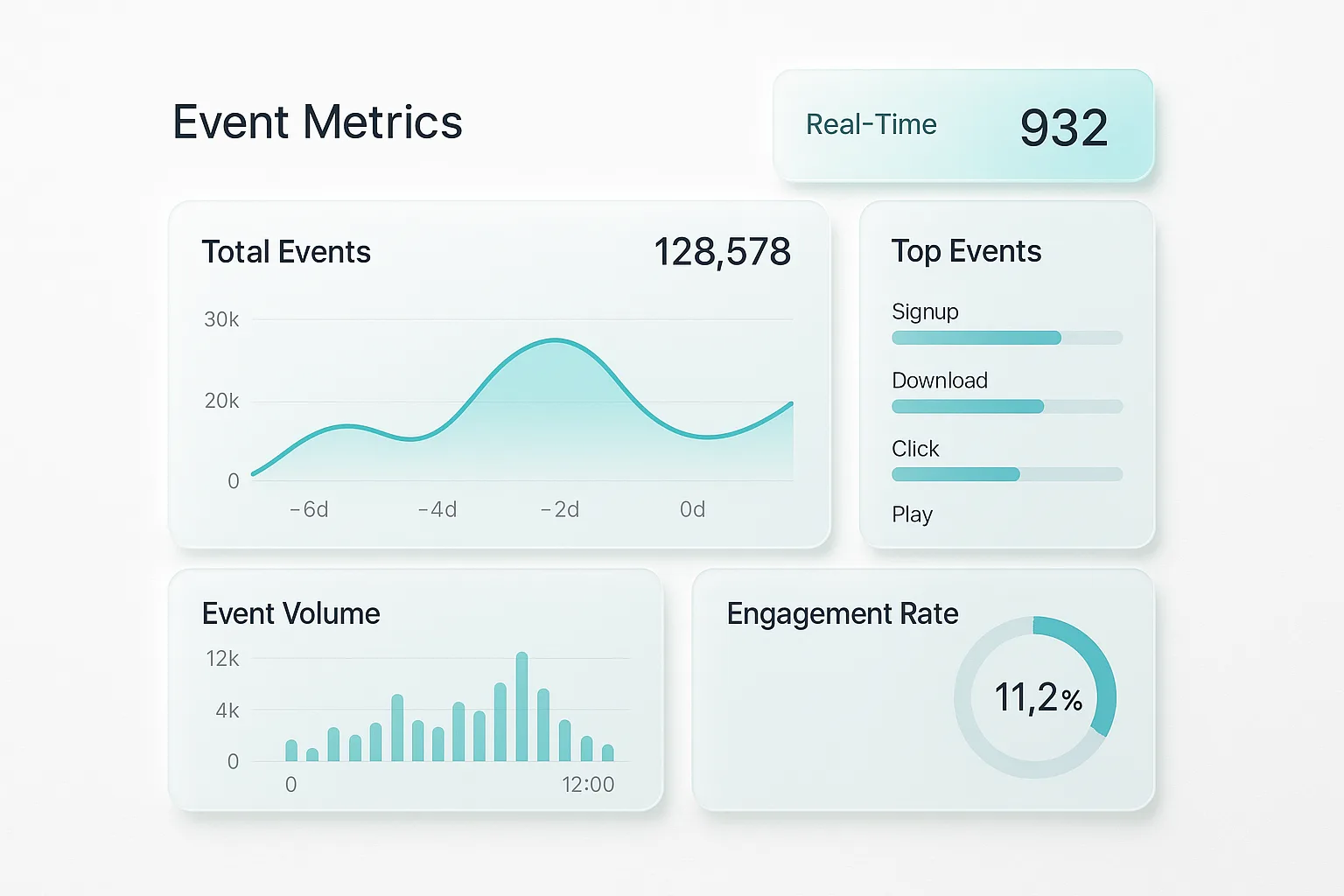
One report covering venue attendance, online viewership, session engagement, and poll participation across both audiences.
Map the agenda across both audiences. Define which moments are shared, which are audience-specific, and how interaction flows between in-person and remote sides.
Configure the virtual platform, integrate it with on-site production, and connect registration data across both environments.
Full hybrid rehearsal including remote speaker tech checks, return-feed verification, and a run-through of every audience interaction moment.
On-site AV crew and a dedicated online producer run the event in parallel, coordinated through a shared show-calling workflow.
On-demand content is published to the platform and a consolidated engagement report covering both audiences is delivered.
The difference between a broadcast and a shared experience is bidirectional engagement. When remote audiences can interact as equals — not just watch — both sides feel part of the same event.
We design interaction into the agenda — shared polls, moderated Q&A that reaches the stage, networking lounges, and a dedicated online producer who manages pacing and content for the remote audience between sessions. Engagement is a production role, not a platform feature.
Yes. Remote presenters join through a managed contribution workflow with a pre-event tech check, appear on the venue LED at broadcast quality, see and hear the room through return feeds, and can take live questions from both audiences.
Yes. We run a single registration pipeline with ticket types for each attendance mode. The same record drives venue check-in and badging for physical attendees and platform access for virtual ones, so your data stays unified.
On-demand sessions are published to the platform immediately after the event, so remote attendees can catch up on missed content and watch replays in their own time zone.
We conduct pre-event tech checks with every remote speaker, provide bandwidth recommendations, monitor connection quality during the event, and have failover procedures if connection drops.
Hybrid events succeed when remote and in-person attendees feel equally involved. Let's design an experience where both sides participate as one.
// CONTINUE EXPLORING
Up to the category, across to complementary services, and into the engine-room notes.

