// CATEGORY
All Rental & Support
Show-ready hardware, venue-grade connectivity, and engineers who stay until the last attendee leaves.
Explore
Temporary high-density Wi-Fi, dedicated bandwidth, and bonded backup links engineered for venues where thousands of devices connect at once.
Venue internet is the silent dependency of every modern event: registration systems, payment terminals, live streams, press uploads, exhibitor demos, and several thousand attendee phones all hit the network at the same moment. House Wi-Fi built for a quiet Tuesday collapses under it. We design and deploy temporary event networks engineered for that exact load profile.
Traditional venue Wi-Fi is built for background business use, not peak-load event scenarios. When 3,000 devices connect simultaneously in a plenary hall, plus broadcast streams and payment terminals fighting for bandwidth, standard infrastructure fails — often at the worst moment.
Our approach: RF-surveyed network design, dedicated provisioning, segmented VLANs protecting critical systems, and live operational oversight from event start to finish.
RF-surveyed access-point placement and channel planning optimised for thousands of concurrent devices per hall, eliminating dead zones and interference.
Leased-line provisioning with bonded 4G/5G failover — and fully wireless primary links for venues fibre cannot reach.
Streaming, payments, registration, exhibitors, and attendees isolated on separate segments with guaranteed throughput where it matters most.
Sponsor-able login experiences with per-tier access codes for VIP, press, exhibitor, and general attendee tiers — turning connectivity into event inventory.
Engineers monitoring throughput, client density, and interference throughout the event, intervening before users notice degradation.
Hardline connectivity for broadcast positions, stages, registration counters, and exhibitor stands — no reliance on wireless for critical paths.
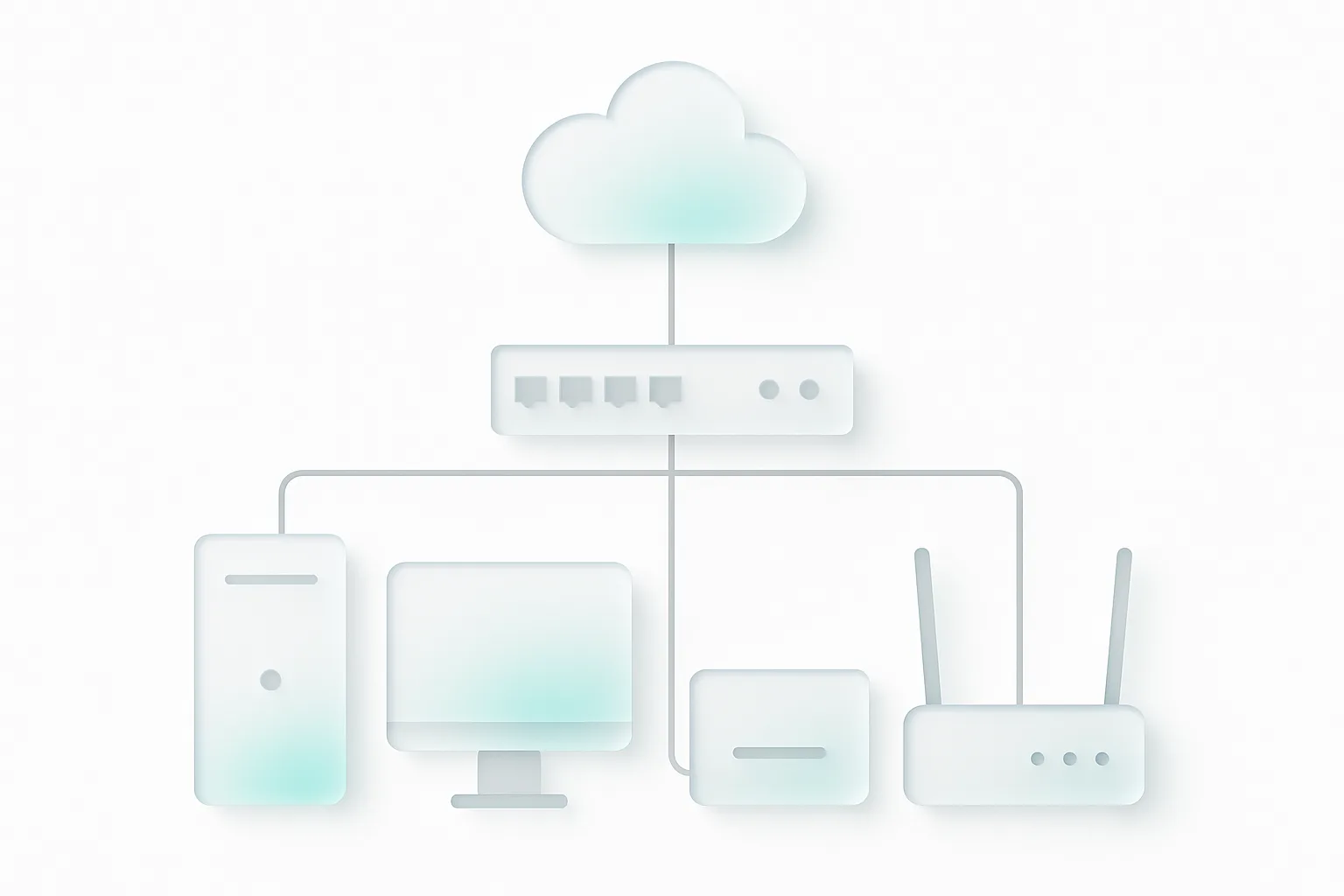
Venue RF survey plus a device-count and usage model per zone — the math that determines access-point quantity, backhaul architecture, and total bandwidth provisioning.
Topology, VLAN plan, and QoS policy designed; circuits and backup links ordered well ahead of venue lead times to ensure delivery.
Installation and configuration completed pre-event, with load testing and failover drills verifying performance before attendees arrive.
Live monitoring and on-site engineers for the full event window, with documented escalation paths and rapid intervention protocols.
Clean de-rig and a post-event usage report covering peak concurrency, data volumes by segment, and portal engagement metrics.

The difference between a seamless event experience and a technical crisis often comes down to invisible infrastructure. Networks that work are forgotten — until they fail.
Venue networks are typically built for ambient business use, not 3,000 simultaneous devices in one hall plus a live stream. We assess the house network honestly — sometimes it genuinely suffices — and where it does not, we overlay or replace it. The cost of finding out live, at registration on day one, is far higher.
It is a model, not a guess: attendee count and usage profile, number of streams and their bitrates, exhibitor requirements, and press needs each contribute. A 1,000-person conference with one HD stream profiles very differently from a 200-exhibitor expo. The site survey produces a per-zone bandwidth plan you can review and sign off on.
Failover is designed in, not improvised: bonded 4G/5G backup (or a second diverse circuit) is provisioned and tested before the event. Critical segments are prioritised so registration, payments, and streaming hold even in a degraded state.
Yes. Branded captive portals, splash pages, and tiered access codes turn connectivity itself into event inventory. Sponsors can be featured at login, and VIP tiers unlock faster speeds or priority access — creating revenue and a premium attendee experience.
Talk to us about your event's connectivity needs. We'll survey the space, model the load, and design a network that works.
// CONTINUE EXPLORING
Up to the category, across to complementary services, and into the engine-room notes.