

// CASE STUDY
Event IT Infrastructure & Technical Operations
4 min read
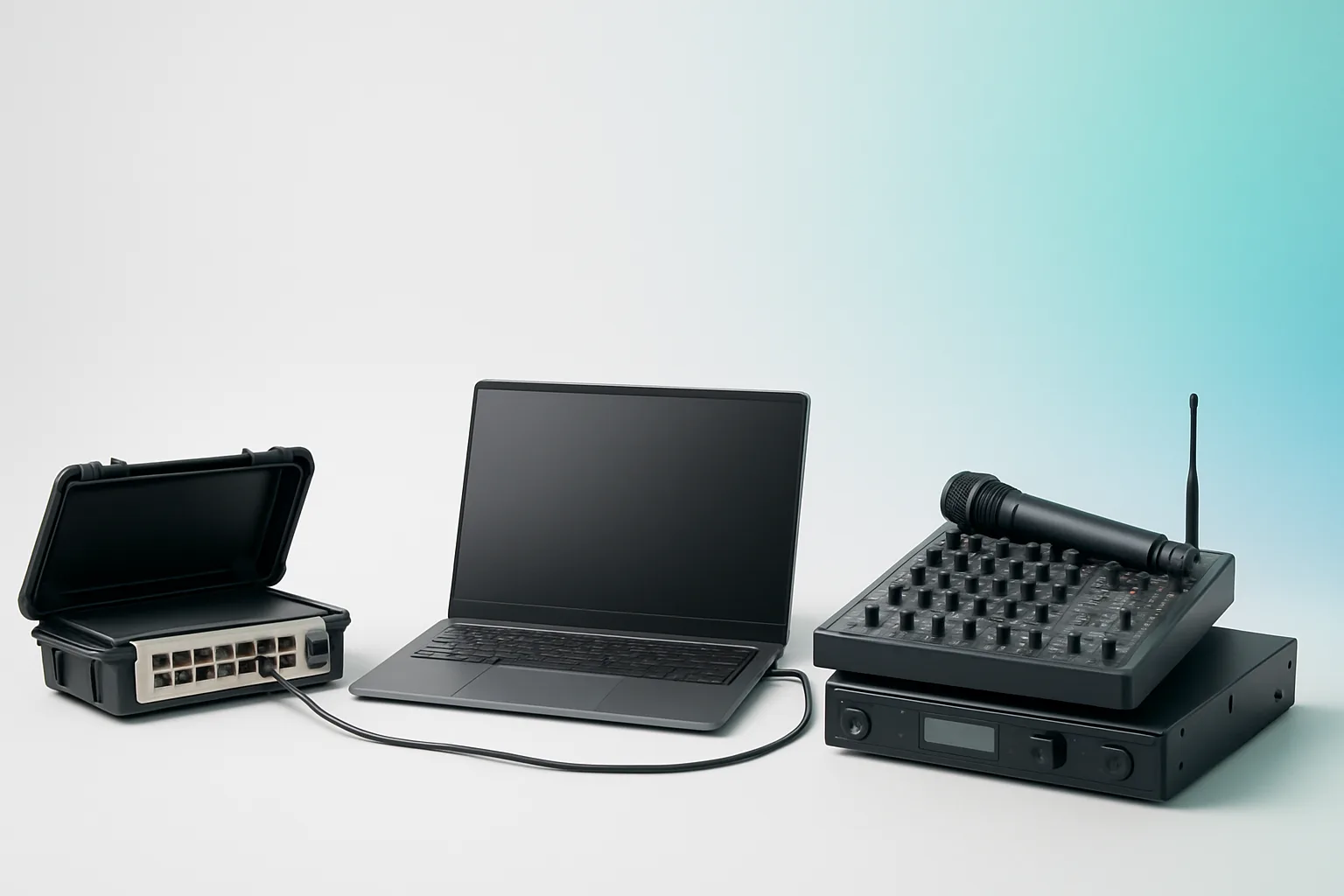
Every great event runs on an invisible layer: displays that stay live, devices that work, networks that don't collapse, and people who fix things fast. This is the unglamorous, essential backbone—the engineered system that lets production teams focus on what attendees see.
The challenge: One partner, not four
When a corporate event spans multiple halls with complex A/V, registration, and connectivity demands, fragmentation creates risk.
Traditional approach: rent LED walls from Vendor A, laptops from Vendor B, network from Vendor C, staffing from Vendor D. When something fails at show-time, fingers point.
Better approach: treat the physical technology layer as a single engineered system. One partner owns displays, devices, connectivity, and support—with rehearsals, redundancy, and accountability built in.
What an engineered engagement looks like
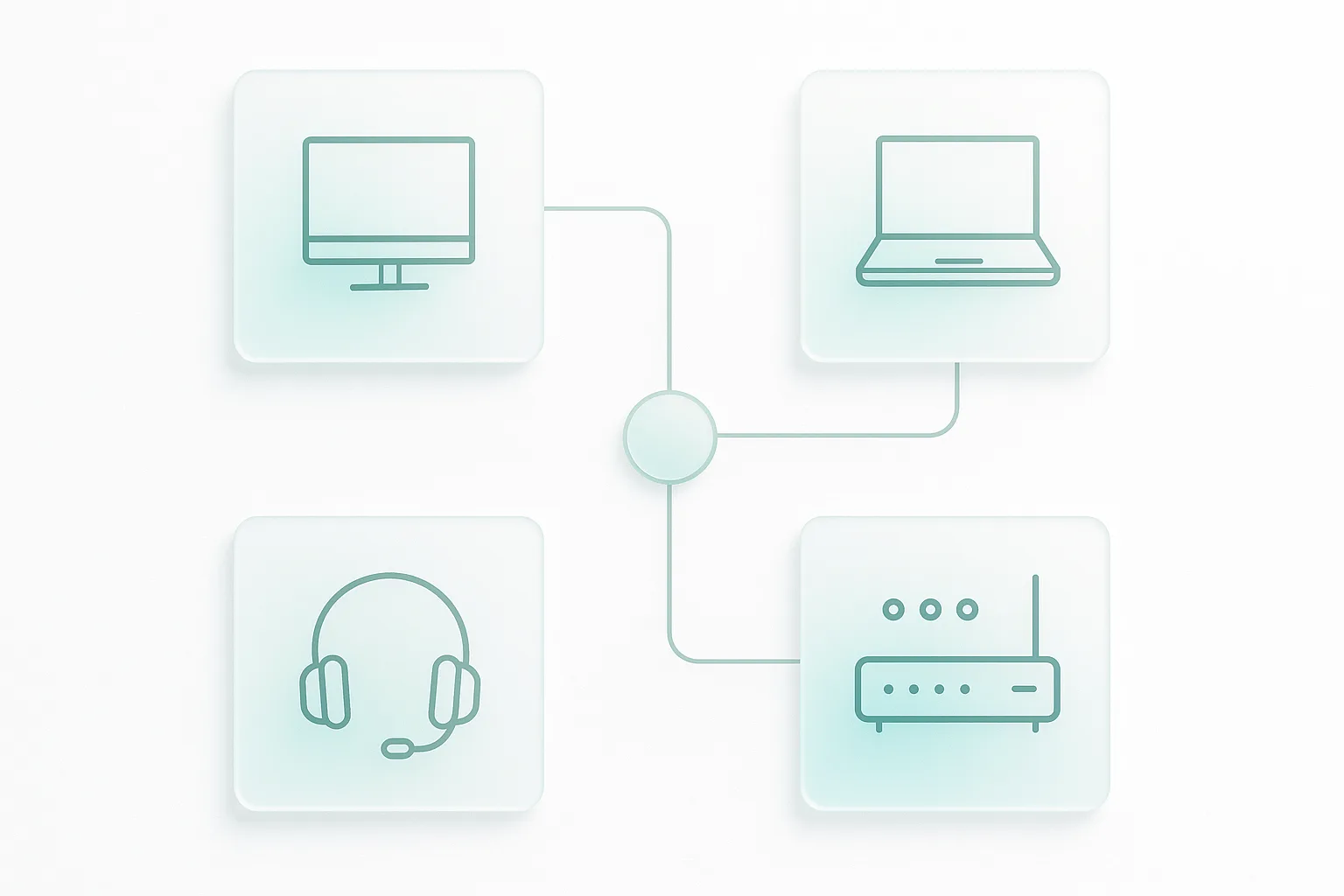
Display systems LED video walls for main stage and breakout rooms, color-matched in rehearsal, with spare panels and a documented hot-swap procedure.
Device fleet Laptops for registration and speaker-ready rooms, badge printers at every lane, wireless headsets for silent sessions—all imaged, tagged, and tracked in a live asset log.
Venue connectivity Dedicated bandwidth segmented into production, registration, and attendee networks via VLANs and QoS, so peak phone traffic never starves the livestream.
On-site helpdesk Staffed desk plus floor runners on radio, with response SLAs by severity (critical, high, standard) and every incident logged for the post-event report.
The impact of integrated operations
Core pillars of show-day reliability
Pre-event rehearsal
Every display, device, and network path tested under load before day one. Color grading, failover routes, and response procedures documented and drilled.
Redundancy at every layer
Spare LED panels, backup uplinks, redundant internet feeds, and secondary devices for critical functions. Spares are not nice-to-have—they are the plan.
Real-time asset & incident tracking
Every device tagged and tracked. Every support request logged with severity, response time, and resolution. Data feeds the post-event report and continuous improvement.
Segmented networks with priority
Production traffic, registration systems, and attendee Wi-Fi run on separate VLAN paths with QoS rules. Bandwidth is never starved by volume spikes.
Named owners & escalation
Every system has an owner and a chain of command. When something fails, response is automatic—no meetings, no finger-pointing.

Why the physical layer is the foundation
The most creative production, the most inspiring keynote, the slickest registration flow—none of it happens if the displays go dark, the Wi-Fi drops, or the badge printer jams.
Yet the physical layer is often treated as a commodity: cheapest rental, minimal planning, reactive staffing.
Flipping that: When the IT backbone is engineered, rehearsed, and staffed as a core production system, the visible parts of the event can take risks. Speakers can go off-script. Technical transitions can be ambitious. Attendee experience becomes frictionless.
The goal is invisibility—nobody tweets about venue IT when it works. That's the measure of success.
The invisible systems are often the difference between an event that runs smoothly and one that survives. Treat IT as a core production pillar, not a contingency.
Common questions about event IT
Why not just rent everything separately?
Fragmentation creates gaps: when the LED wall vendor, device vendor, and network vendor each optimize for their own solution, integration fails. One integrated partner owns the entire stack, rehearses failures, and is accountable for the outcome.
What happens if a critical device fails during the event?
Spares are pre-deployed and hot-swap plans are documented in rehearsal. Backup devices are imaged identically and ready to swap in minutes. Every critical path has redundancy.
How do you prevent network congestion with thousands of attendees?
Segmented VLANs isolate production traffic from attendee Wi-Fi. QoS rules prioritize critical systems. Uplinks are bonded and tested for peak load. Bandwidth is reserved, not shared.
What does the helpdesk actually do?
Staffed desk monitors incidents, floor runners respond to in-venue issues, and every request is logged with severity and response time. SLAs vary by urgency—critical issues are addressed in minutes, standard issues within the hour.
How do you measure success?
Invisibility is the goal: no user-facing failures, no escalations, no workarounds. Post-event, incident logs show resolution times and patterns for next-event optimization.
Ready to engineer your event's IT backbone?
Whether you're planning a multi-hall conference, a hybrid corporate event, or a large-scale venue activation, integrated technology infrastructure is the foundation. Let's talk through your venue, audience size, and ambitions.


