

// CASE STUDY
Multilingual Live Broadcast at State Scale | ZebIQ
4 min read
A flagship public event, statewide audience, one programme stage running in Hindi and English — but viewers online span multiple language communities. The mandate: every audience member hears it live in their language. Not tomorrow. Tonight. This is how we built infrastructure-grade multilingual broadcast at scale.
The Challenge
Multilingual access is usually an afterthought:
- Delayed re-uploads posted hours or days later
- Single overloaded interpreter channel that can't scale
- Fragmented workflows treating translation as separate from broadcast
- No redundancy or failsafe if a language feed drops
Built properly, multilingual access becomes part of the broadcast infrastructure itself — with the same reliability, rehearsal, and monitoring as the main programme feed.
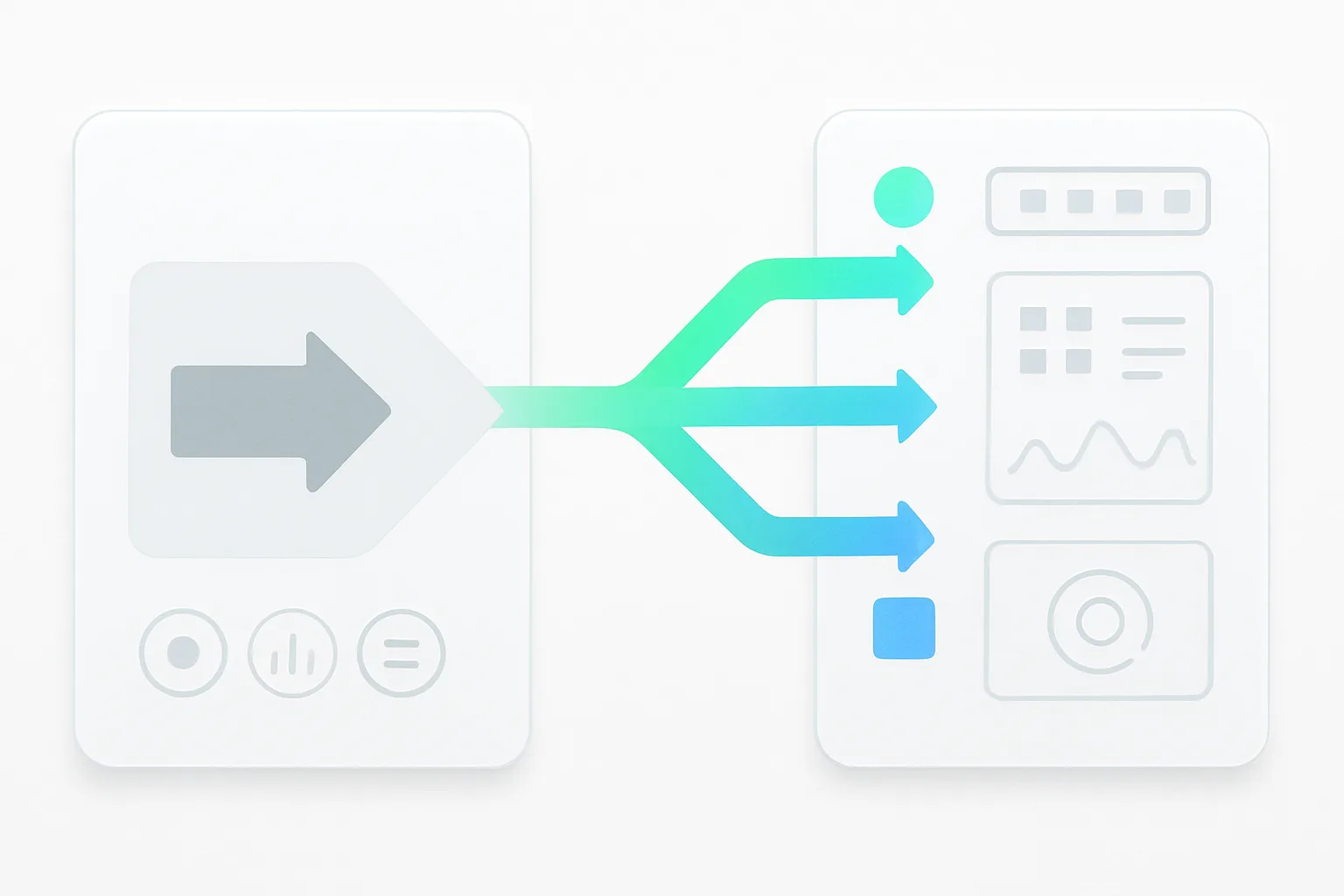
Our Approach: The Realtime Dubbing Engine
Single programme feed in. Parallel language feeds out.
The stage mix — one source of truth — enters our Realtime Dubbing Engine and emerges as synchronized streams in multiple Indian languages, each with natural re-voiced audio.
- Live language synthesis with event-aware glossaries
- Per-language distribution to dedicated stream endpoints
- Human monitors with override consoles for quality assurance
- Automatic recovery protocols for seamless continuity
What We Delivered
Synchronized Multi-Language Output
One programme feed processed through the Realtime Dubbing Engine produces parallel streams, each with synchronized dubbed audio in its target language. Viewers select their language once and stay immersed.
Language-Tagged Distribution
Each language stream publishes to its own endpoint with language-tagged players. Audiences choose their preferred language at the start, no mid-stream switching required.
Human-in-the-Loop Quality Control
Dedicated language monitors with override consoles watch each track in real time. Event-specific glossaries ensure names, places, and programme terms are rendered correctly across all languages.
Full-Day Reliability
The pipeline runs across the entire event day — speaker changes, music interludes, crowd segments — with automatic recovery rules rehearsed in advance. No single-point failures.
On-Venue Latency Control
GPU inference runs locally at the venue to minimize processing delay. Cloud distribution handles redundancy and scaling without adding unnecessary latency.
Unified Health Telemetry
Per-track monitoring on a single console tracks all language streams, infrastructure health, and failover triggers in real time.
Infrastructure Standards
The Technical Stack
SRT Contribution
Secure Reliable Transport carries the primary programme feed from venue to processing pipeline with minimal latency and maximum reliability.
On-Venue GPU Inference
Local GPU processing synthesizes dubbed audio streams in real time, keeping latency under broadcast tolerance and reducing cloud load.
Language Monitor Consoles
Human operators watch each language track with event-specific glossaries and instant override capability. No automation runs unsupervised.
Redundant Cloud Distribution
Multiple distribution paths ensure each language stream reaches viewers without single points of failure. Automatic failover keeps all feeds live.
Per-Track Health Telemetry
Unified monitoring console tracks latency, audio quality, failover triggers, and stream health across all language outputs simultaneously.
When multilingual access is treated as infrastructure — built with the same redundancy and rehearsal as the main broadcast — it stops being a feature and becomes a guarantee.
Multilingual Broadcast: Common Questions
How much latency does real-time dubbing add?
With on-venue GPU processing, end-to-end latency is typically sub-2 seconds — well within broadcast tolerance. Cloud processing adds ~4–6 seconds; we use on-venue inference to stay live.
What languages can be supported simultaneously?
The engine scales to as many target languages as your distribution capacity allows. We typically handle 4–8 major regional/national languages for state-scale events. Custom language sets supported on demand.
How do you handle proper nouns, brand names, and event-specific terminology?
Pre-event glossaries are built with your communications and language teams. Monitors watch in real time and can override synthesis outputs if a term isn't rendered correctly. Human-in-the-loop quality is non-negotiable.
What happens if a language feed fails mid-event?
Automatic failover protocols route traffic to redundant cloud distribution paths. Monitors can also manually trigger fallback feeds. We rehearse failure scenarios in advance — no surprises on event day.
Can this work with live music, crowd noise, or mixed-language segments?
Yes. The engine is trained to handle speaker transitions, music, ambient sound, and mixed-language content. Music can be passed through or replaced with instrumental versions, depending on licensing and creative intent.
Do you need a separate interpreter for each language?
No — the Realtime Dubbing Engine replaces traditional interpreters. Human monitors ensure quality, but they're watching synthesis outputs, not doing simultaneous interpretation themselves. Massive scalability gain.
Ready to Reach Your Entire Audience Live
Multilingual broadcast at state scale isn't theoretical. It's infrastructure. Let's build it for your next flagship event.

