

// CASE STUDY
Hybrid Summit Platform & Operations | 5,000+ Attendees
5 min read
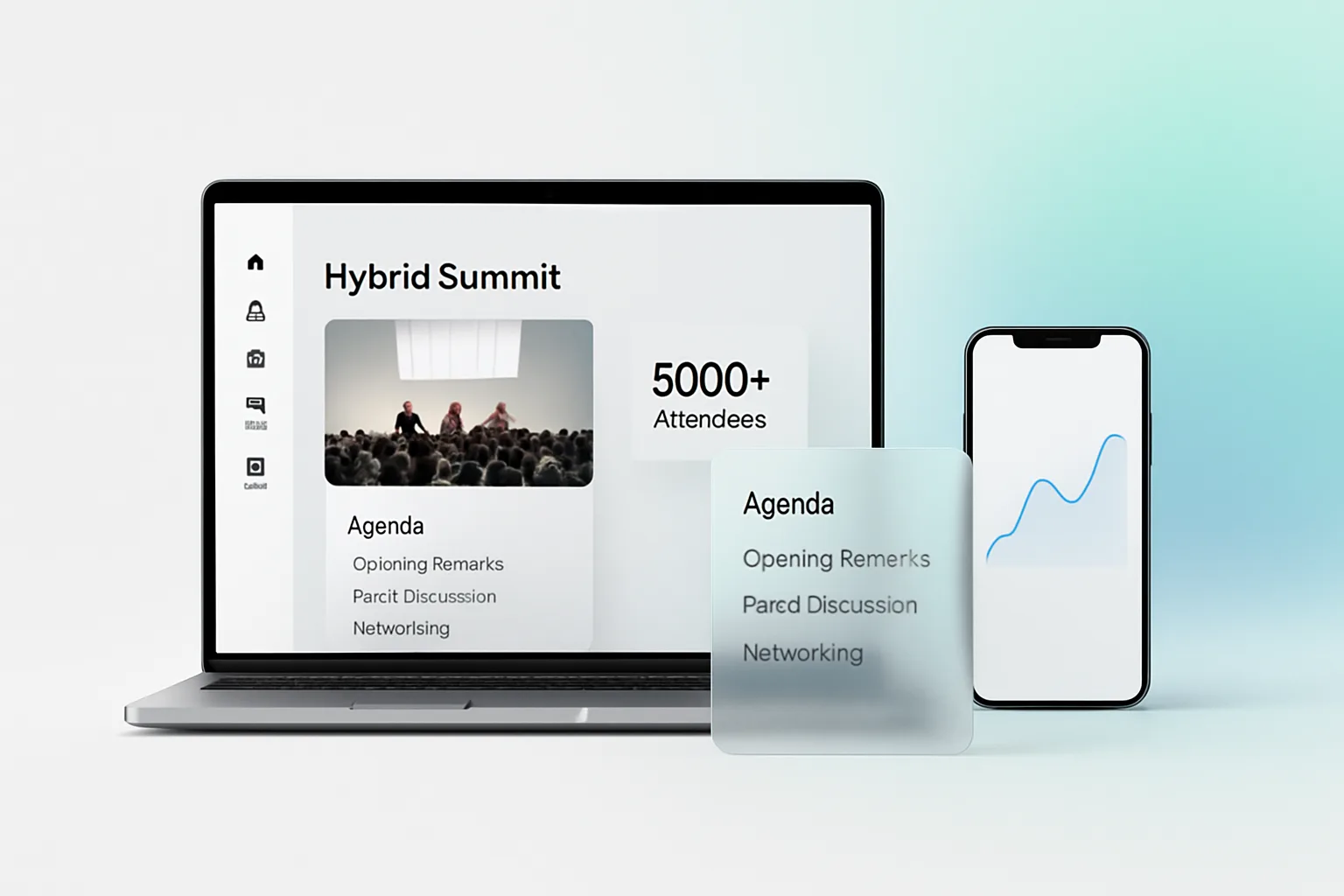
Hybrid events fail in the seams—between registration vendors, AV crews, and streaming teams. A truly integrated platform eliminates those friction points. See how end-to-end ownership of the attendee journey—from email invite to post-event insights—transforms a 5,000-person multi-track summit into a seamless, high-engagement experience both in-venue and online.
The Challenge
Corporate summits at scale demand flawless coordination across dozens of moving parts:
- Thousands of attendees across multiple venue tracks and online simultaneously
- Complex workflows from registration approval through badge printing to session access control
- Distributed responsibility across vendors, creating blind spots and accountability gaps
- Real-time decision-making during rehearsals and all show days
- Attendee experience that feels unified, whether in person or streaming
Traditional point-solutions stitched together rarely deliver. What's needed is one team, one platform, one runbook.
What We Delivered
Registration & Ticketing Branded registration portal with role-based approval workflows for delegate categories, payment integration, and QR-coded confirmations—attendees arrive ready to check in fast.
Venue Access & Badging Lane-based QR check-in with on-the-spot badge printing. Access rules enforced per delegate category for restricted sessions—no manual gate decisions, no bottlenecks.
Multi-Track Streaming Every concurrent session captured, mixed, and streamed with redundant encoders and bonded uplinks. Online attendees navigate session-by-session rather than watching one endless feed—higher engagement, better viewing experience.
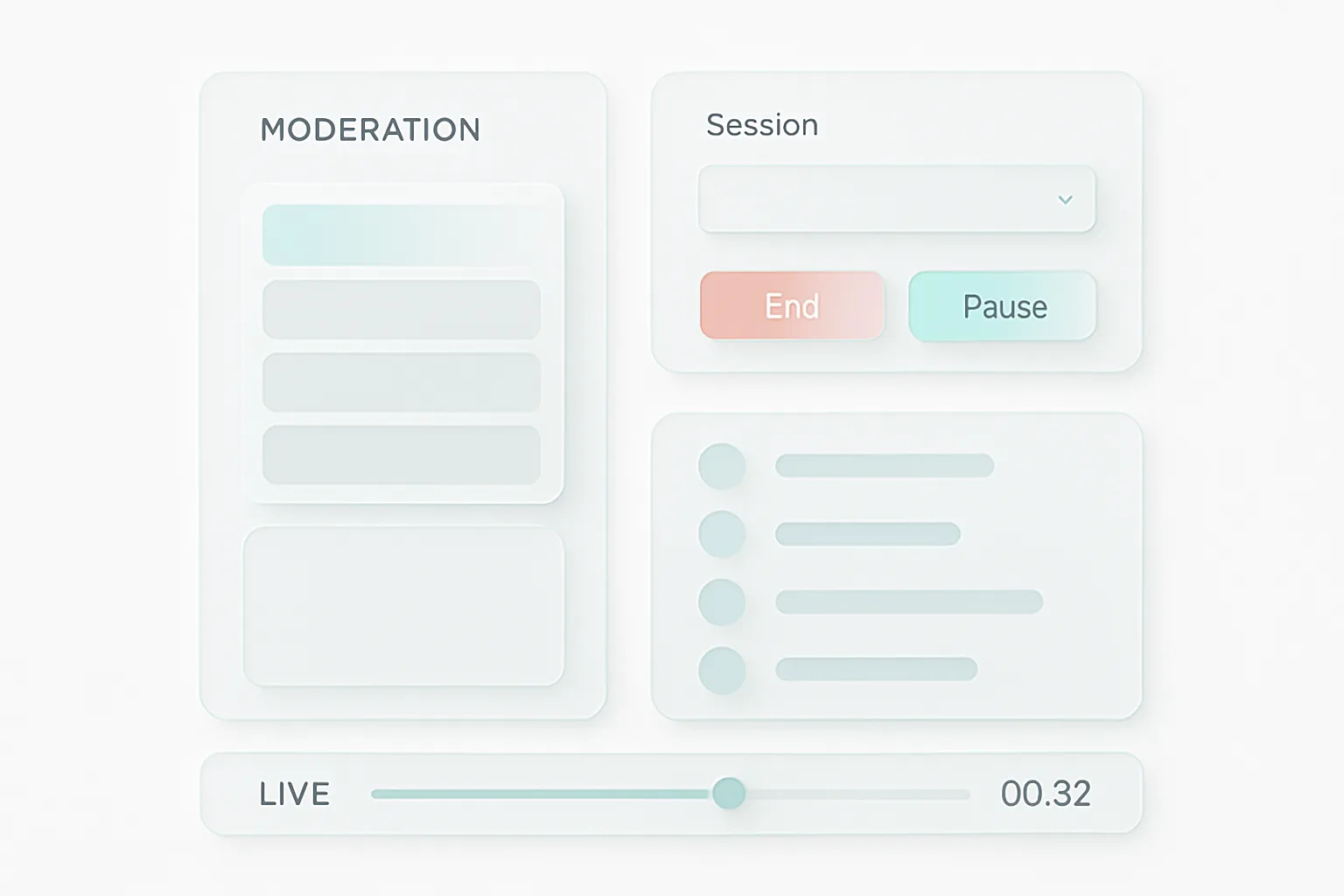
Live Engagement Layer Moderated Q&A and real-time polling in each track, controlled from a single console. One moderator team manages the entire summit's interaction layer, not scattered per-track crews.
Show-Day Operations Our engineers embedded on-site through all rehearsals and live days, with a pre-agreed escalation runbook and decision authority—problems solved in minutes, not hours.
Typical Hybrid Summit Scale
Platform Capabilities
Redundant Encoding
Multiple independent streams ensure no single point of failure. If one encoder drops, attendees never see black screens.
Regional Edge Delivery
Cloud-native architecture with geographically distributed edge nodes. Low-latency streaming worldwide, whether attendees are on-site or remote.
Real-Time Operations Dashboard
Live attendance, stream health, Q&A volume, technical alerts—all visible to the control team at a glance. Proactive not reactive management.
Session-Level Navigation
Online viewers jump between tracks like in-venue attendees hop between rooms. One platform, unified user experience.
Access Control by Role
Restricted sessions visible only to approved delegates. Enforce speaker embargoes, VIP-only workshops, sponsor exclusives—without manual overhead.
Post-Event Libraries
Sessions available on-demand within 48 hours, with metadata, chapters, and transcripts. Attendees continue learning long after doors close.
The Pattern That Matters
Hybrid fails when responsibility is fragmented. One vendor owns registration, another owns AV, a third owns streaming, and a fourth owns analytics. When a technical issue arises—a track audio feed drops, or a QR code doesn't sync with the badge printer—nobody owns the fix. Each team points to the other.
This engagement worked because one team owned the entire attendee journey: from the email invite, through registration approval, QR check-in, streaming access, live moderation, and post-event reporting. A single runbook, single escalation path, single accountability.
When something breaks—and something always does—it's fixed in minutes, not hours, because the decision-maker is in the room and has built relationships with the venue crew, the AV team, and the broadcast engineer.
Our Approach: From Planning to Archive
1. Design & Planning Phase
Map attendee flows, session logic, access rules, and technical requirements. Build the runbook together, agree on decision authority, and stress-test the platform with your team's workflows.
2. Registration & Approvals
Launch the branded portal, configure delegate categories and approval chains, integrate payment, and distribute QR-coded confirmations. We monitor signups and flag any bottlenecks.
3. Pre-Event Rehearsals
Full technical rehearsals with your speakers, AV crew, and venue team. Our engineers test streaming chains, check-in lanes, moderation tools, and backup systems. Every vendor is in the same room.
4. Show Days: On-Site Presence
Our team lives in the control room and on the show floor. We monitor in real time, manage escalations, and adjust on the fly. You focus on content; we own operations.
5. Post-Event Delivery
Sessions processed and uploaded within 48 hours. Attendees get on-demand access, search, and transcripts. Your team gets attendance analytics and engagement reports.
The difference between a hybrid event that feels stitched together and one that feels seamless is whether one team owns the journey end-to-end, or whether attendees get stuck in the gaps between vendors.
Common Questions
What if our attendance is smaller or larger than 5,000?
The platform scales. We've run 500-person virtual summits and 15,000+ hybrid conferences. The same principles apply: one team, unified stack, end-to-end accountability. We size the technical infrastructure and crew to your actual headcount.
Can we use our own AV vendor or streaming partner?
Yes. We integrate with external AV and broadcast crews. The key is that we own the coordination and hold a unified runbook with them pre-event. Hybrid fails when vendors don't talk to each other; we make sure they do.
How do we handle backup if something fails mid-show?
Redundancy at every critical layer: dual encoders, bonded uplinks, backup internet connections, and a pre-agreed manual fallback for worst-case scenarios. Our runbook is tested in rehearsal; we don't improvise on show day.
What's included in post-event delivery?
Session videos on-demand with metadata and chapters, full-text transcripts, attendance and engagement analytics, viewer heatmaps per session, and Q&A logs. Your team gets insights on what resonated and how attendees engaged.
How much lead time do you need?
Ideally 8–10 weeks from platform design through go-live. For urgent timelines, we can compress to 4–6 weeks if your team can move fast on approvals and content. The longer the lead, the more thorough the planning and testing.
Do you handle international attendees?
Yes. Our platform supports multi-language interfaces, regional CDN delivery for low-latency streaming worldwide, and timezone-aware scheduling. We've run global summits with 40+ countries in the audience.
Ready to Run a Hybrid Summit Without the Seams?
Let's talk through your summit vision. We'll audit your existing vendor stack, map the attendee journey, and show you how one integrated platform and one accountable team transforms the experience.

